☰
✕
While AI improved imaging, machine vision lighting technologies haven’t evolved much for years. Luxibright is changing that by introducing the concept of Precision lighting.
LuxiBright® delivers precise illumination exactly where the inspection process needs it, helping cameras and algorithms work with cleaner, more reliable images from the start.
Machine vision continues to advance rapidly: higher-resolution cameras, faster acquisition rates, more powerful AI algorithms and tighter inspection tolerances are becoming the new standard. Yet one critical element is often still treated as secondary: the lighting itself, which ultimately become the limiting factor in image quality and inspection performance. While conventional LED-based lighting solutions are robust and widely used, they typically rely on arrays of discrete emitters, combined with diffusers, reflectors and bulky heatsinks to manage uniformity and heat. This architecture can create unwanted hotspots, uneven illumination, loss of intensity and larger form factors that are increasingly difficult to integrate into compact, highly populated inspection and production machines. As inspection requirements become more demanding, these limitations directly affect image quality. Poor lighting can hide defects, generate false detections or force engineers to compensate with software for information the image never properly captured in the first place.In machine vision, the quality of the decision starts with the quality of the light.
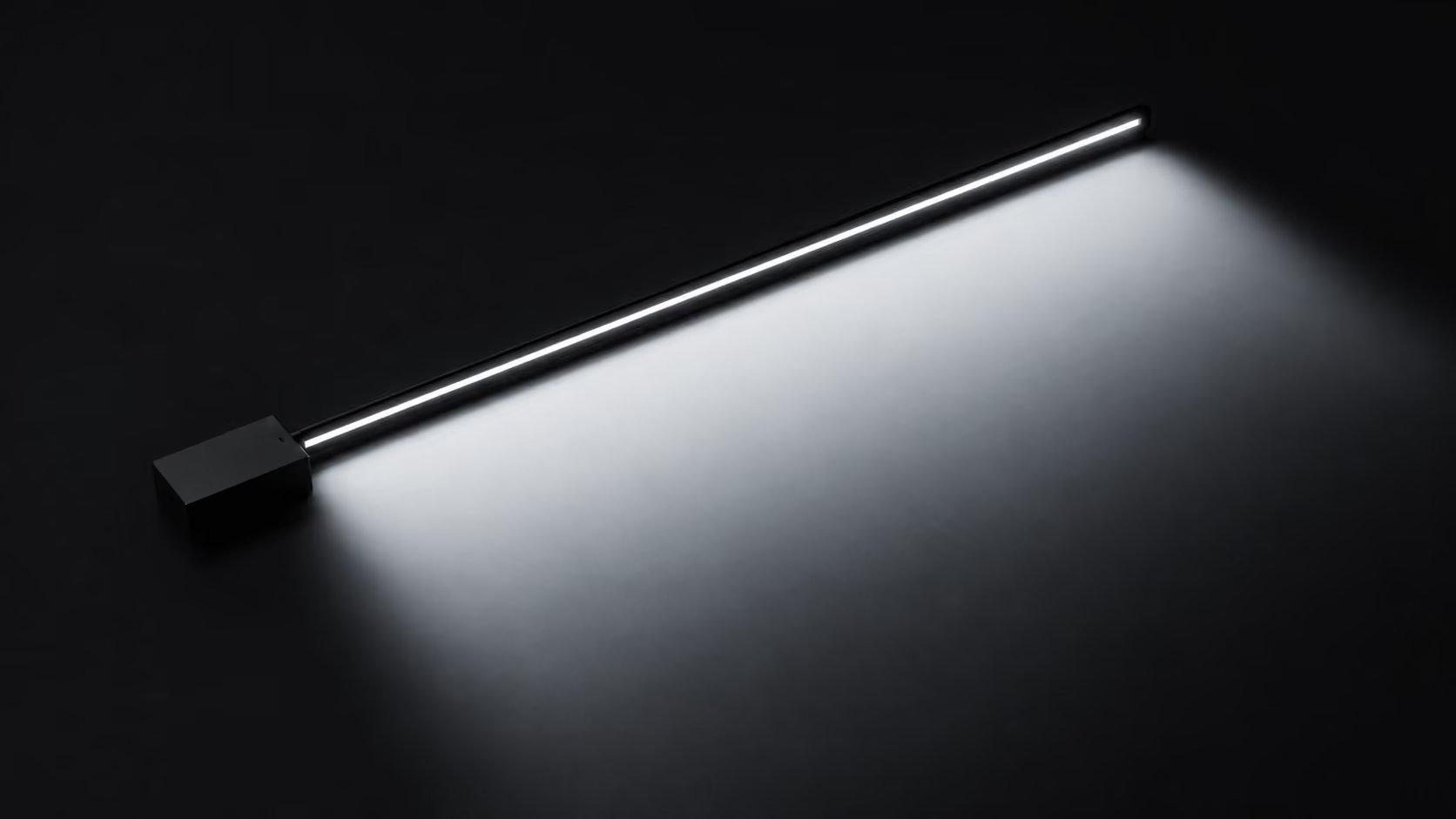
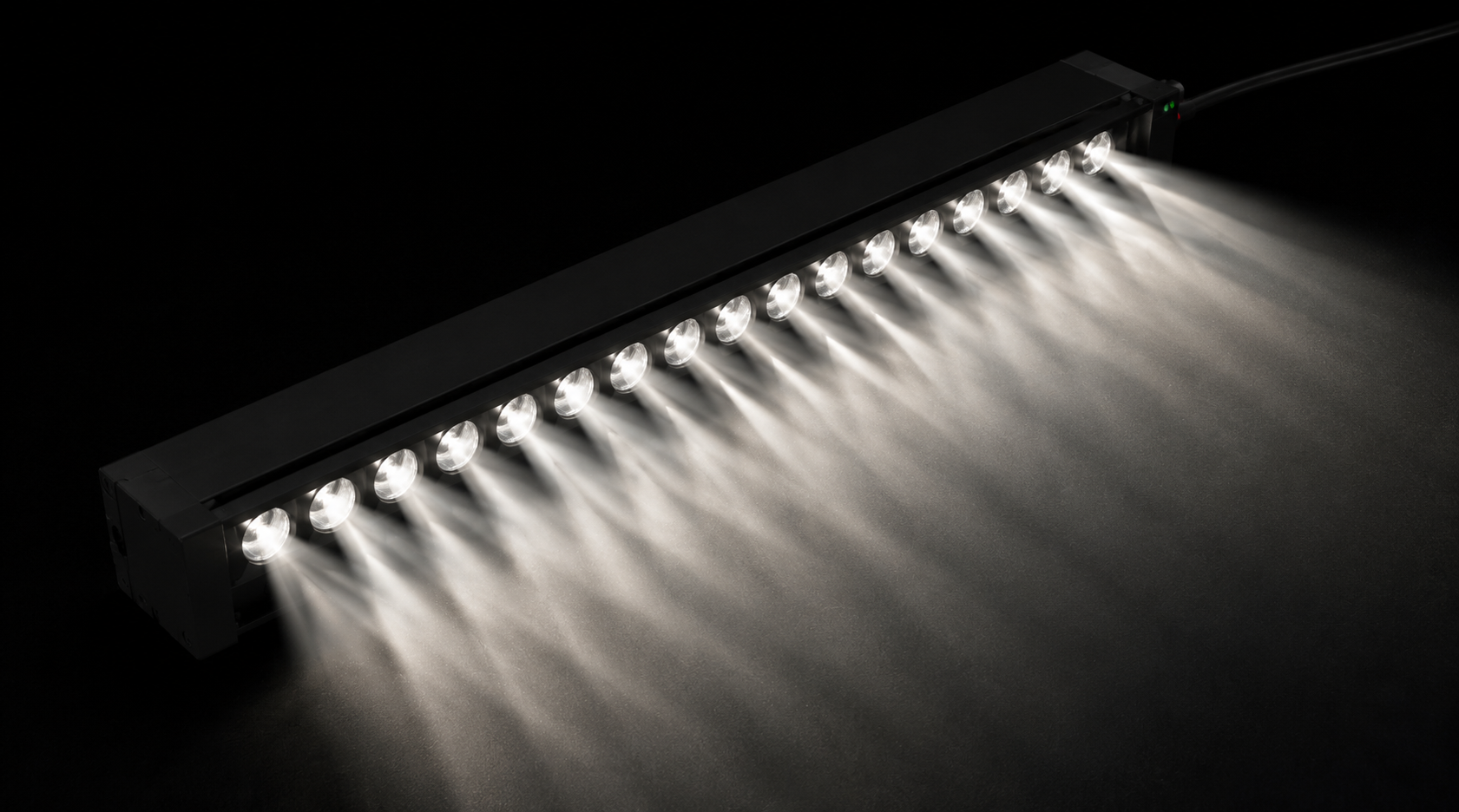
With LuxiBright® , we introduce the concept of Precision Lighting without compromise. We overcome limitation of conventional LED arrays by delivering a continuous, precisely controlled emission architecture. Instead of building illumination from multiple discrete emitters, diffusers and oversized housings, LuxiBright® generates and distributes light in a full integrated way, with high uniformity, strong lighting directionality and excellent contrast across the illuminated area. This matters because in machine vision, image quality is not only defined by the camera or the algorithm. It starts with the way the object is illuminated. When the light is poorly controlled, critical surface information can be lost before the image is even captured. No software can reliably recover a defect that the lighting failed to reveal. This is especially critical in semiconductor inspection, where defects can be extremely small, low-contrast and located on highly reflective or complex surfaces. Scratches, particles, edge defects, coating variations or subtle texture changes require lighting that reveals the signal without adding noise, hotspots or unwanted reflections.
Click below to discover the LuxiBright® difference:
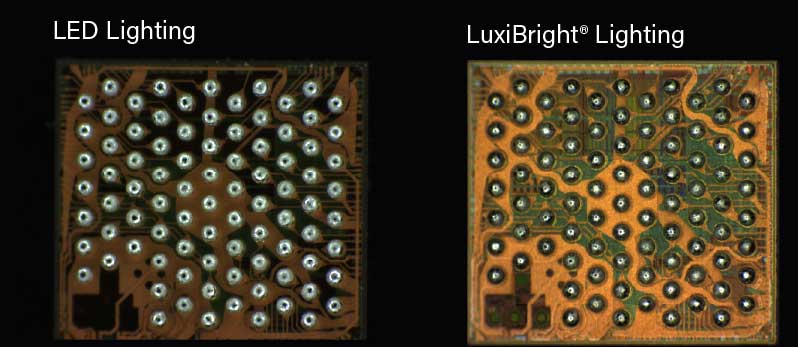
Glare-free imaging of solder balls and bumps, no specular hotspots masking surface defects
Full substrate visibility: traces, pads and markings appear with true color and detail
Consistent contrast across the entire package for reliable automated inspection
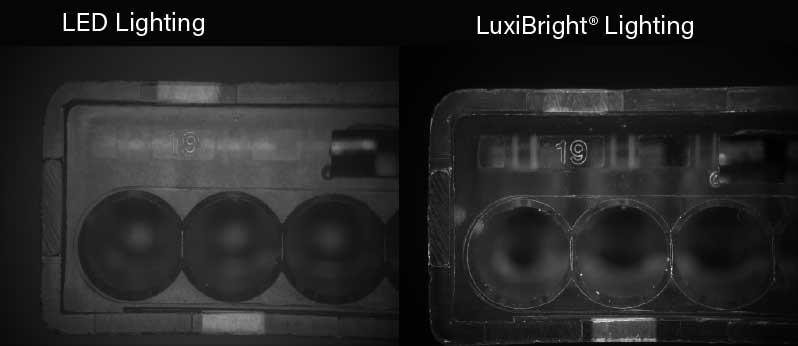
Crisp edge definition on molded and machined micro-parts, no washed-out grey images
Engraved markings and fine surface details stand out with dark-field-like contrast
Reliable edge detection for precise dimensional measurement and part identification
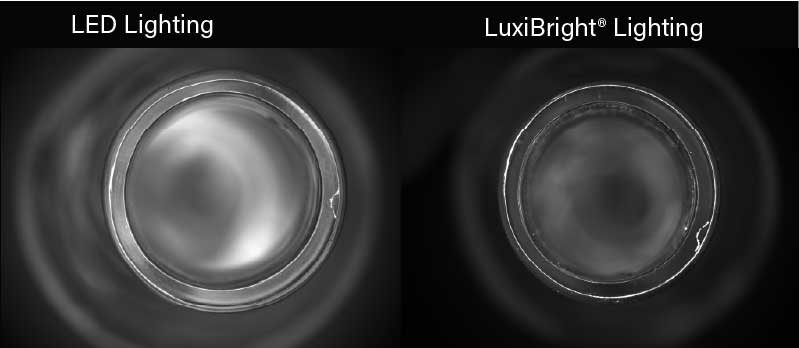
Glare-free inspection of glass vials, ampoules and transparent containers
Reveals cracks, chips and particles that reflections hide under standard LED
Reads embossed codes and markings on transparent and molded packaging
Built around three core optical capabilities that define performance in demanding machine vision applications.
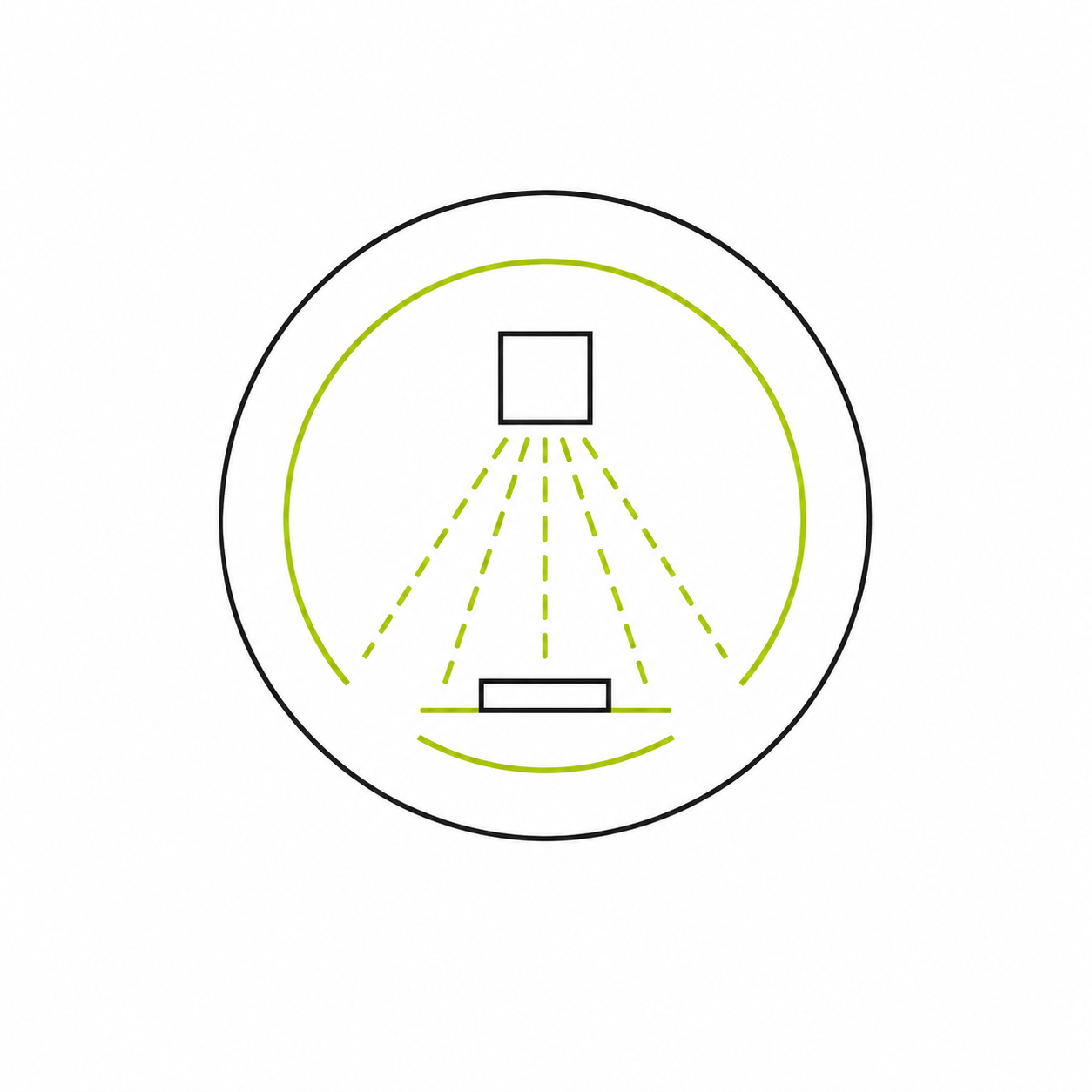
Edge-to-edge light distribution with minimal intensity variance across the full field of view.
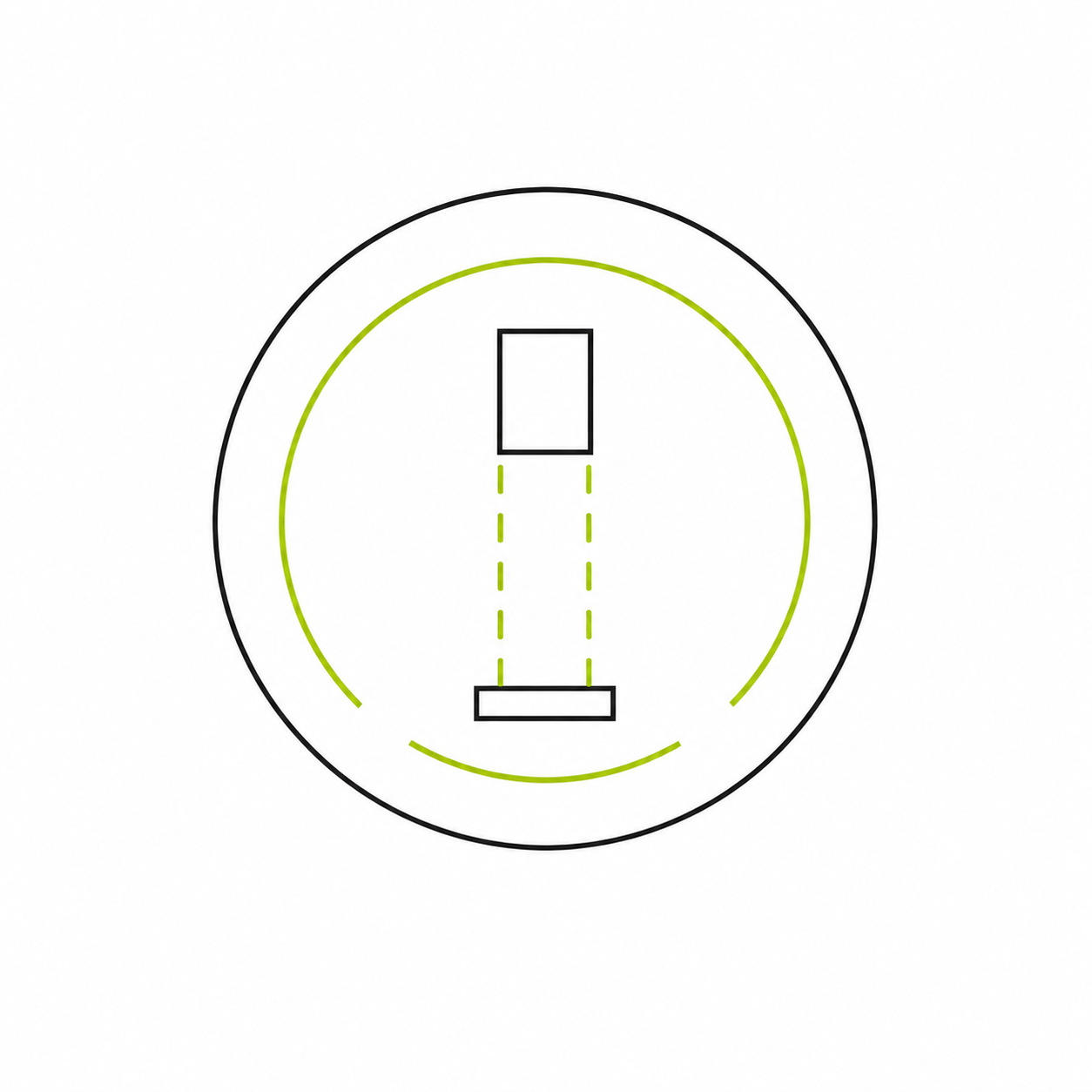
Controlled angle of incidence for precise shadow definition and surface contrast.

Minimal footprint engineered to integrate seamlessly into space-constrained vision systems.
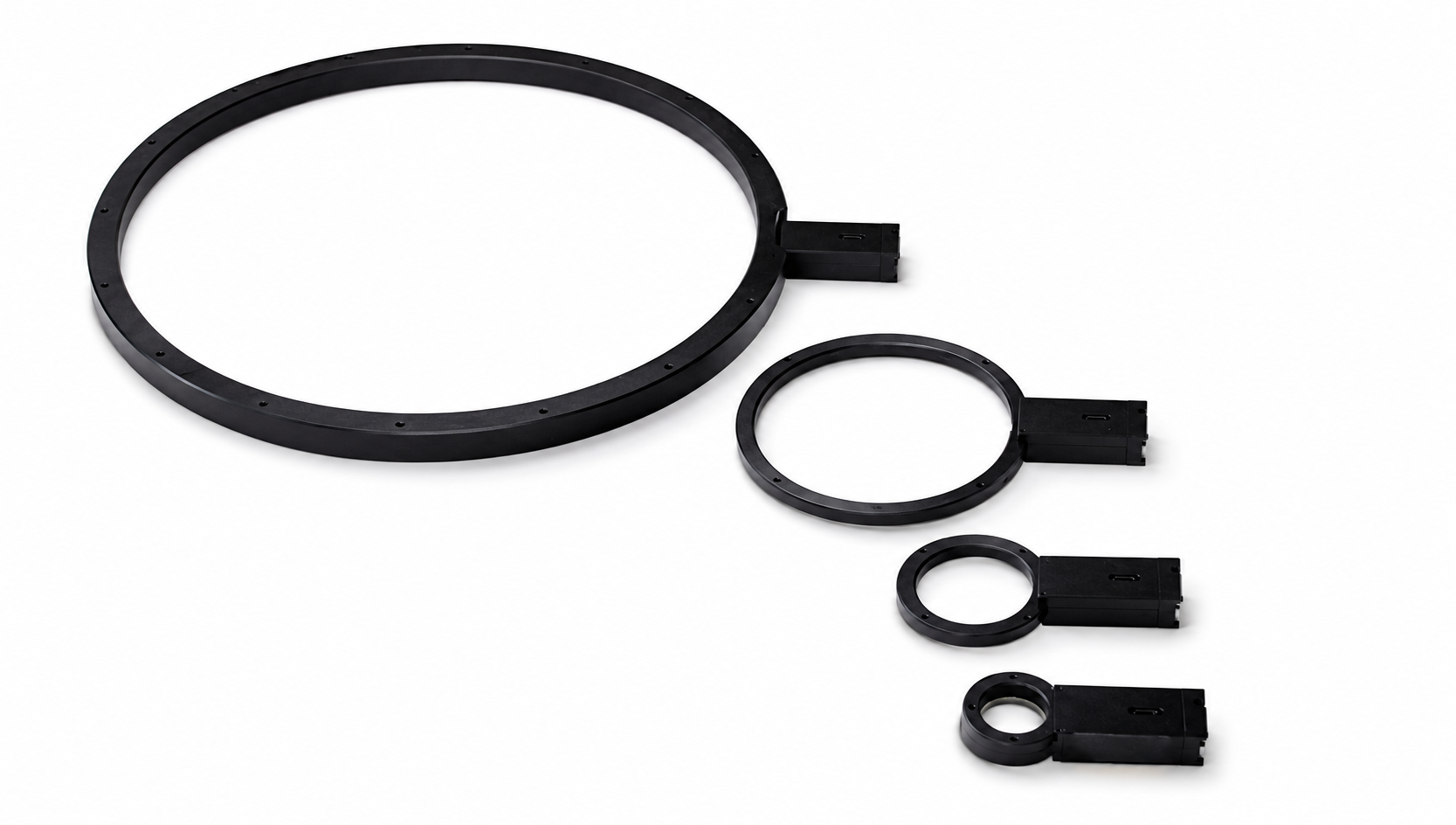
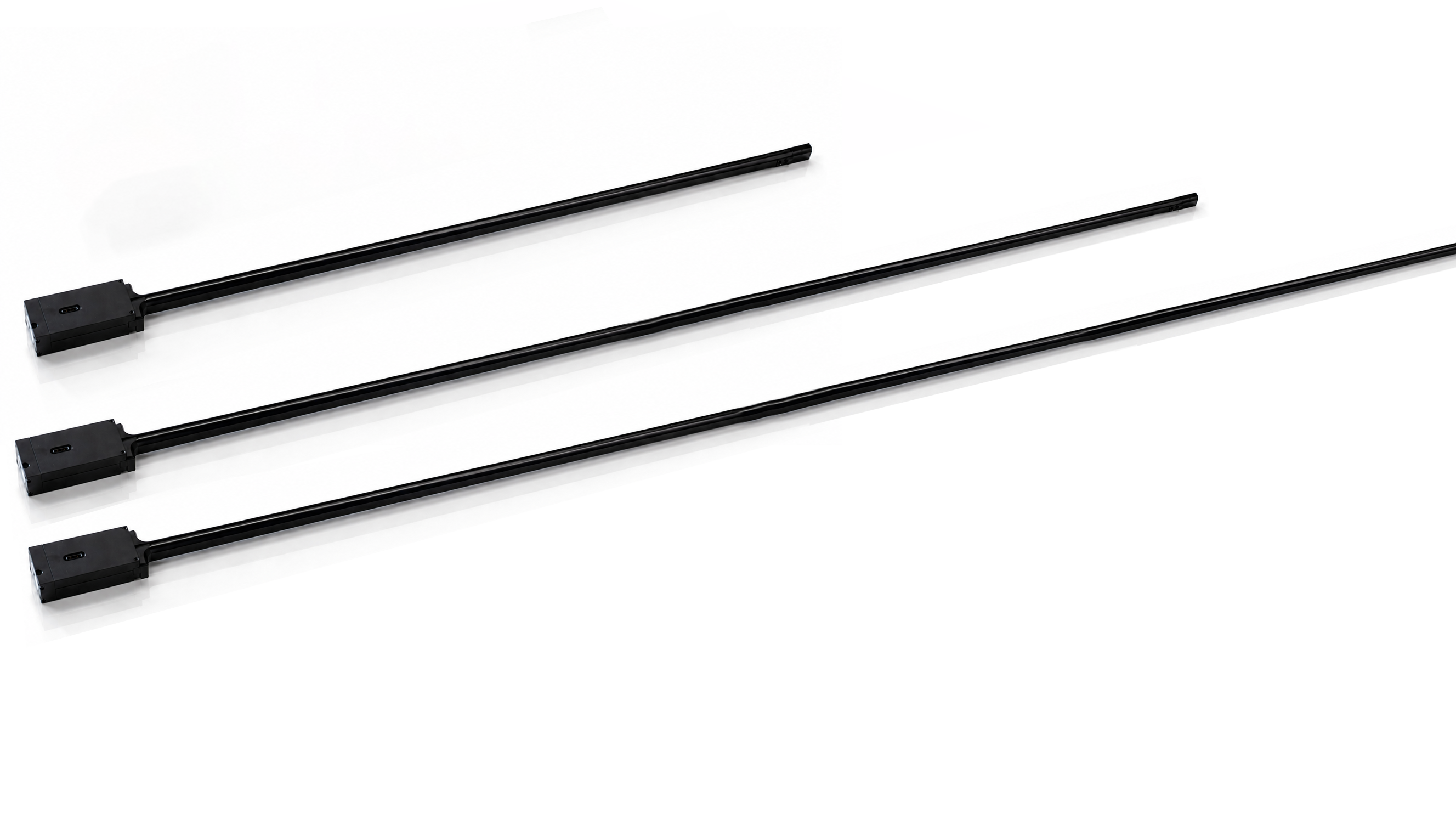
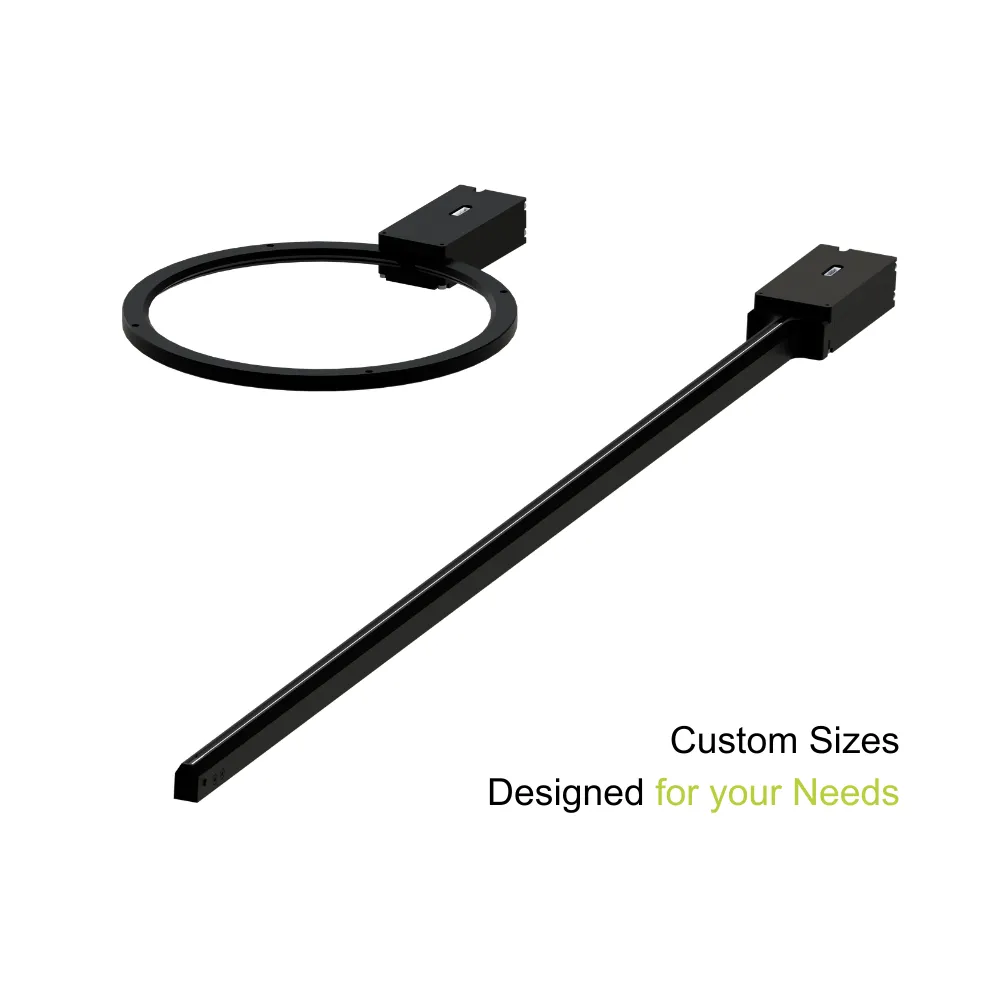
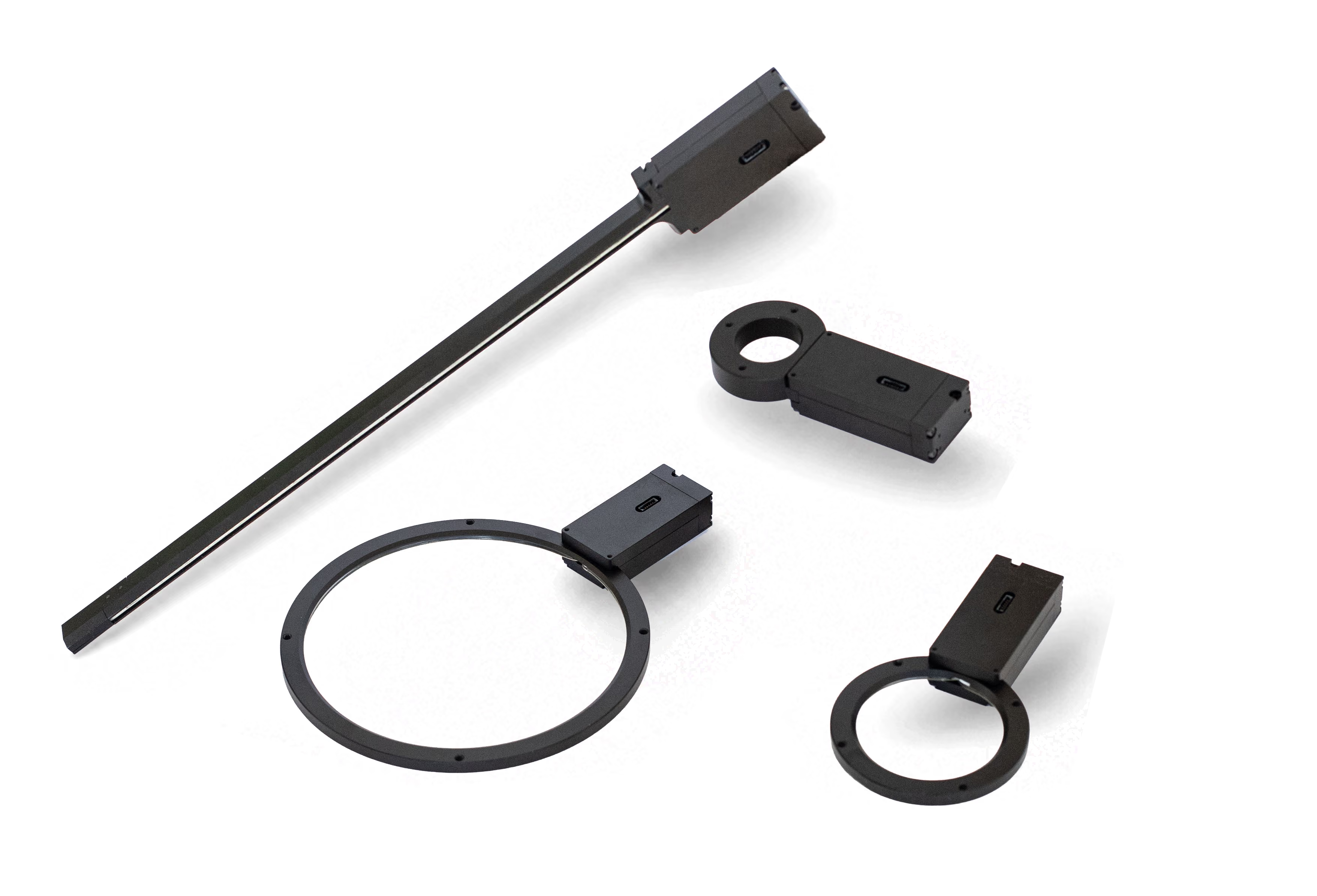
LuxiBright® powers our entire machine vision range, ring and bar lighting that delivers uncompromising precision in ultra-compact designs, for the most demanding automation processes.

Join our LuxiBright® community
Subscribe